

The Can’t See Tree
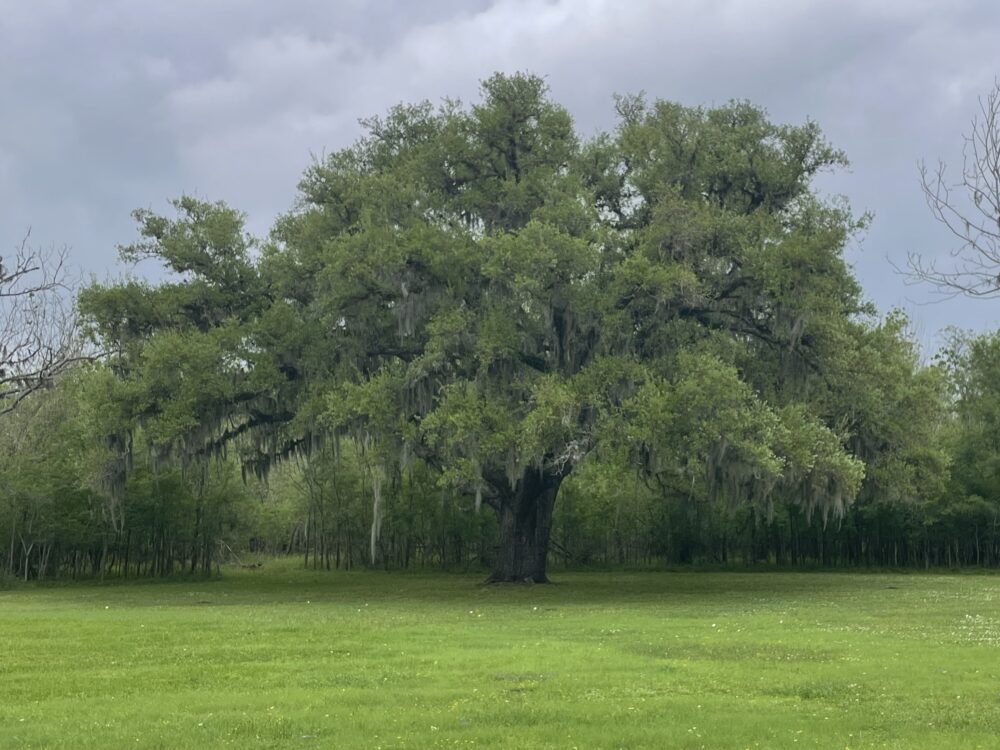
Name of Tree: The Can't See Tree
Project Designation: Witness Tree
Location: Varner-Hogg Plantation, Brazoria County, Texas
Species: Oak
Approximate Age: Standing for over 200 years
Condition: NA
Monument or Marker Present: No
Story
Storyteller: William PolleyIn 1865, there was an old live oak tree growing on the Patton Plantation near Varner Creek just up from its mouth on the Brazos River, deep in the heart of Texas’s Low Country in Brazoria County, where Sugar Cane grew twenty feet tall. This plantation is now called Varner-Hogg. The first owner, Martin Varner, acquired a 4,428-acre league of land in 1824. Varner distilled the first ardent spirits in Austin’s Colony in that year. He grew sugar cane with enslaved labor to produce rum. Later, a family named Patton bought the plantation and built a sugar mill. Not far from this sugar mill, as the land falls towards the creek, stood an ancient live oak tree. The enslaved called it the “Can’t See Tree”.
During the harvesting of sugar cane in October, the cane mill ran 24 hours a day. It was a race against time to cut and haul the cane to the mill to be ground before the first frost. This was the hardest work on the plantation. With so many workers moving to and fro, it afforded the enslaved the possibility to slip off and take a break. They stole quietly down the hill behind this tree to be out of sight from the overseer. They named this tree “The Can’t See Tree” for this reason.
As told to Brady Mora and Naomi Carrier by the young Black historian, William Polley.
HARVESTING CANE AT PATTON PLANTATION
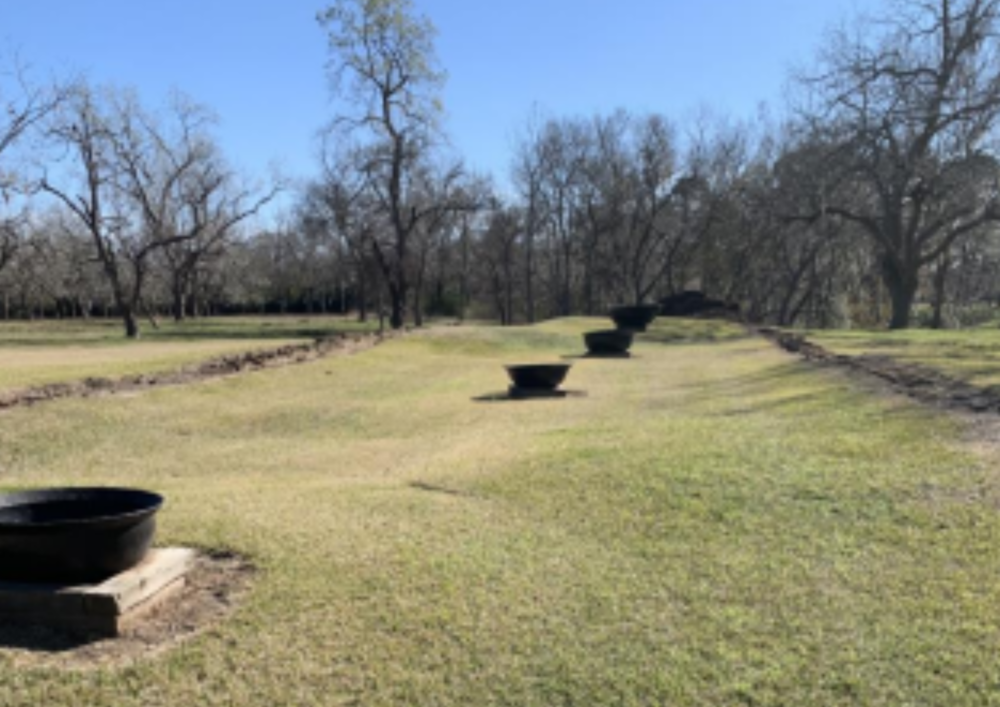
During harvest season, the work was continuous around the clock. There was the cutting and hauling of cane to be ground into juice before cooking into molasses at the sugar mill before the first frost. It was a race against the weather. While the men did the cutting and hauling of cane to the mill for grinding, the women were busy at the boiling pots. It took two cords of firewood to produce one hogshead of sugar. Each acre of sugar cane required four cords of firewood for boiling and to run the steam engine for heating the
kettles.
The machinery at the sugar mill was loud and continuous. There was no rest until all the cane had been boiled and poured into the hogsheads, known also as barrels. Barrels were manufactured by a skilled enslaved person who was known as a Cooper. Each barrel/hogshead weighed 450 pounds. The hogsheads were then placed upside-down on ledges in a barn so that the molasses could drip down into other hogsheads on a lower level for the sale of molasses. Then the contents of the barrel on top would begin solidifying into dark brown sugar. Once the process was completed, the hogsheads were loaded onto
barges on Varner Creek after a rain made the creek rise.
These hogsheads were first floated down Varner Creek, the short distance to Bells Landing, where they were loaded onto a larger boat for shipment to the Port of Galveston. From Galveston, these goods were shipped to the Eastern United States, to Liverpool, England, Vera Cruz, and other international ports to be enjoyed in coffee and baked goods.
Want to Learn More?
https://www.instagram.com/p/DTdymD2Emty/?utm_source=ig_web_copy_link&igsh=MzRlODBiNWFlZA==