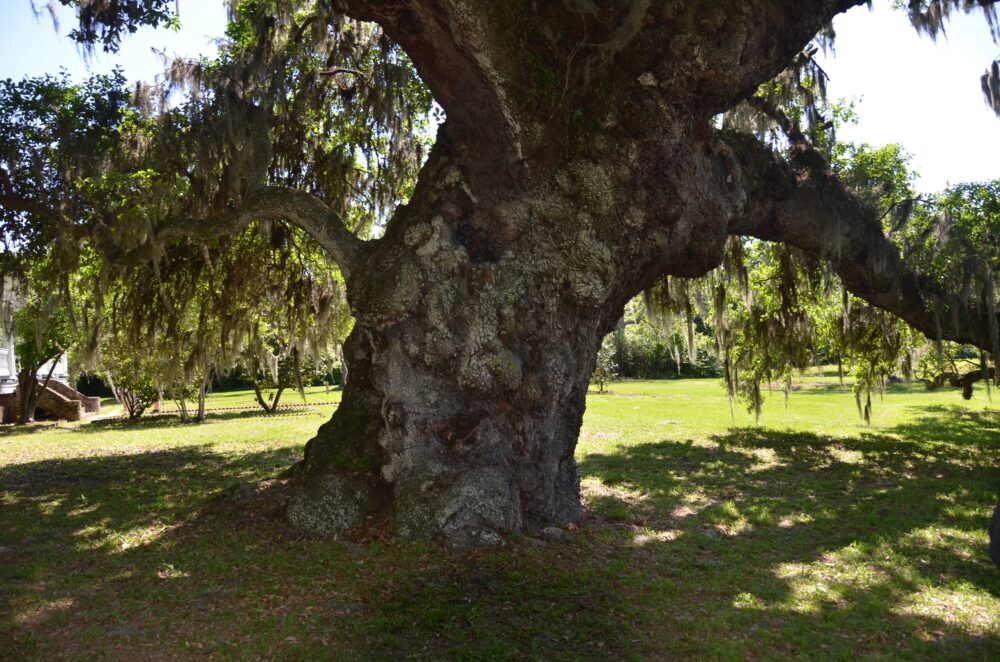
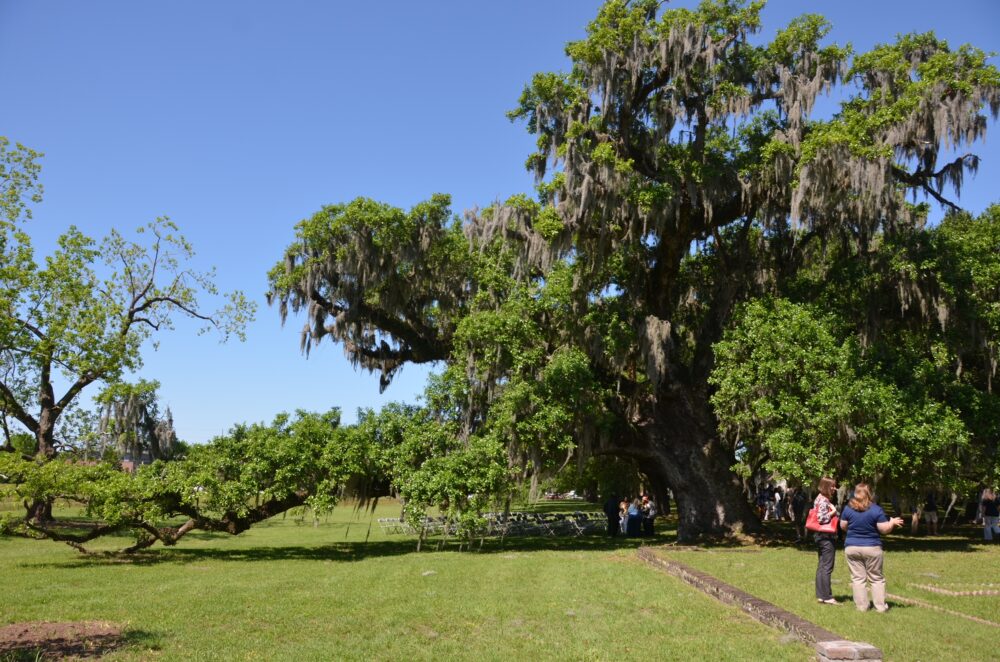
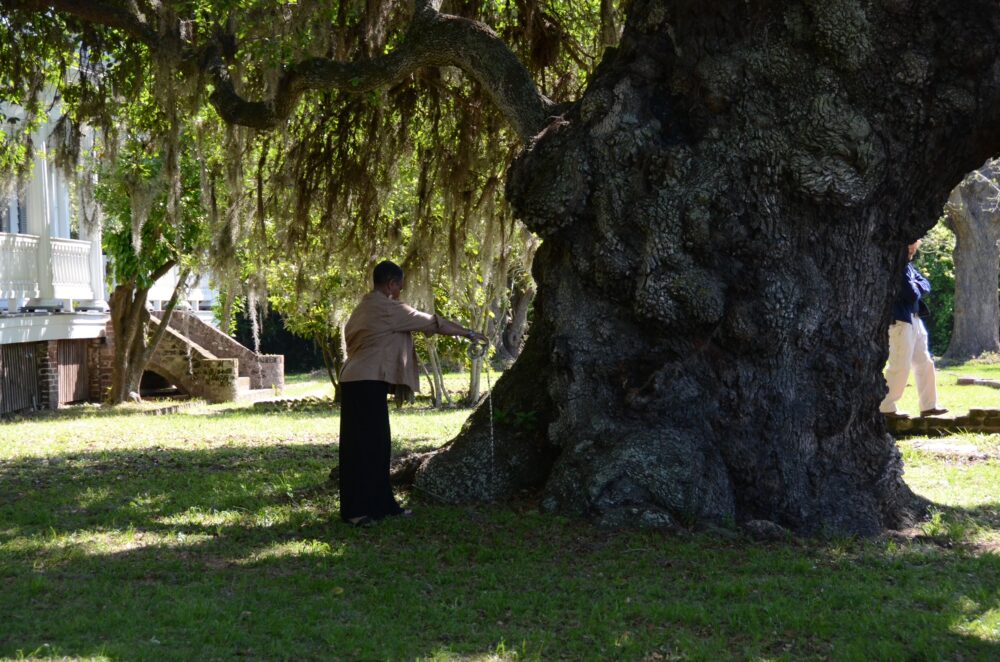
Name of Tree: The "Wisdom Tree" Project Designation: Witness Tree Location: James Island, Charleston, SC Species: Oak Approximate Age: 300-600 years old Condition: Stable Monument or Marker Present: No
Story
Storyteller: Elisabeth Ramsey, Pictures by Corie Hipp
The “Wisdom Tree” at McLeod Plantation is one of South Carolina’s many Black heritage trees rooted on former plantation land. Said to predate the plantation itself—which was formally established in 1851—the tree stands as an elder presence on the property. Long before colonization reshaped the landscape, this tree likely witnessed Native communities who lived and told stories on James Island. As centuries unfolded, it became a silent observer to the arrival of colonizers, the rise of plantation agriculture, and the lives of the enslaved people forced to labor on McLeod’s fields.
By the 1860s, seventy‑four enslaved men, women, and children were working on the property. Their daily movements, conversations, grief, and resistance unfolded beneath the branches of trees like the Wisdom Tree. Though only one tree carries the name, the plantation grounds are dotted with many heritage trees—each capable of echoing the same stories of endurance, exploitation, and humanity. Together, they form a canopy of memory, holding the weight of generations who lived and labored on this land.
Today, the Wisdom Tree and the broader McLeod property can be visited through guided tours led by Gullah Geechee interpreters—descendants of the enslaved communities who shaped the cultural fabric of the Lowcountry. Their storytelling brings the landscape to life, offering visitors a chance to understand the plantation not as a picturesque historic site, but as a place of survival, culture, and ongoing legacy.
The Wisdom Tree stands as a reminder that the land remembers. Its roots reach into eras that predate the plantation, and its branches stretch into a present where descendants reclaim narrative power. It is a living archive—holding stories that continue to shape South Carolina’s history and the communities connected to it.