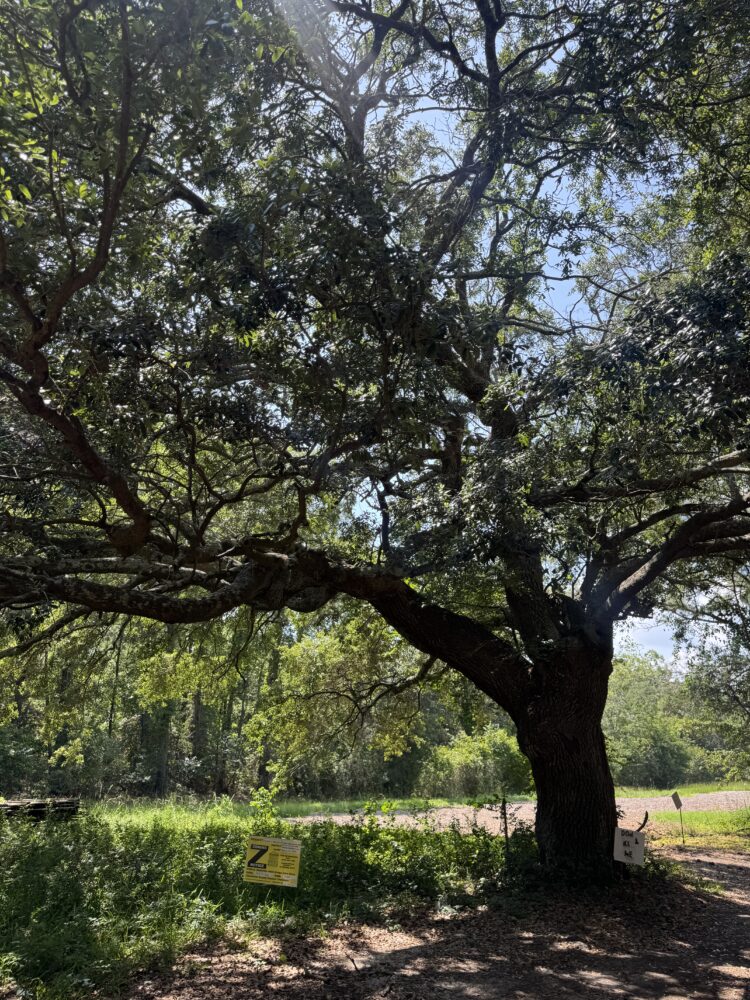
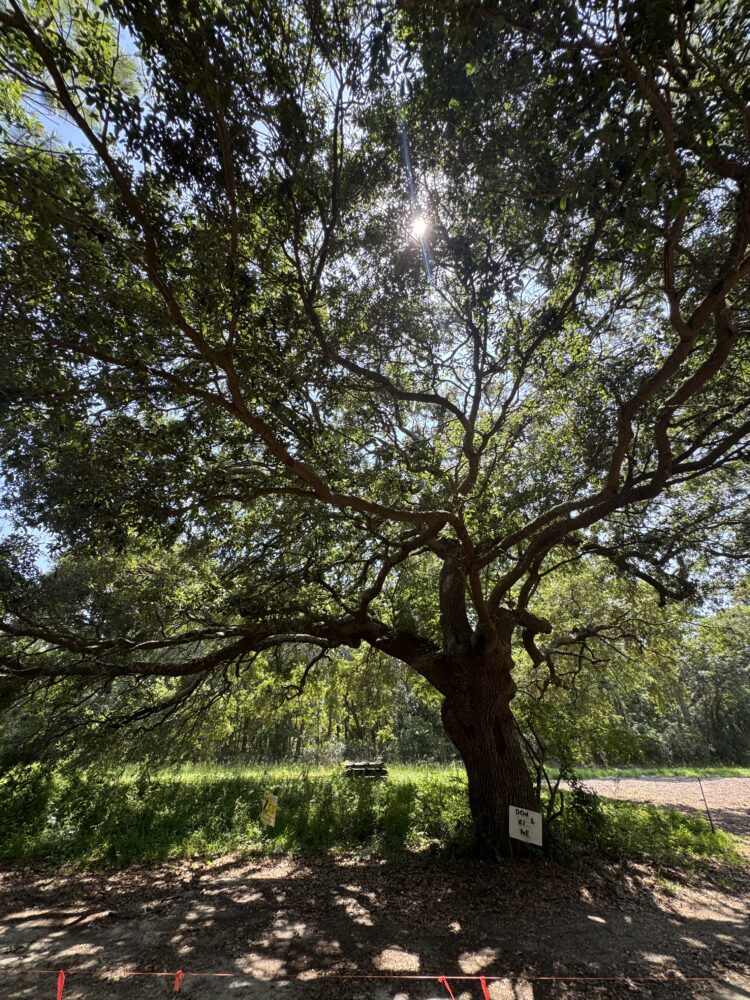
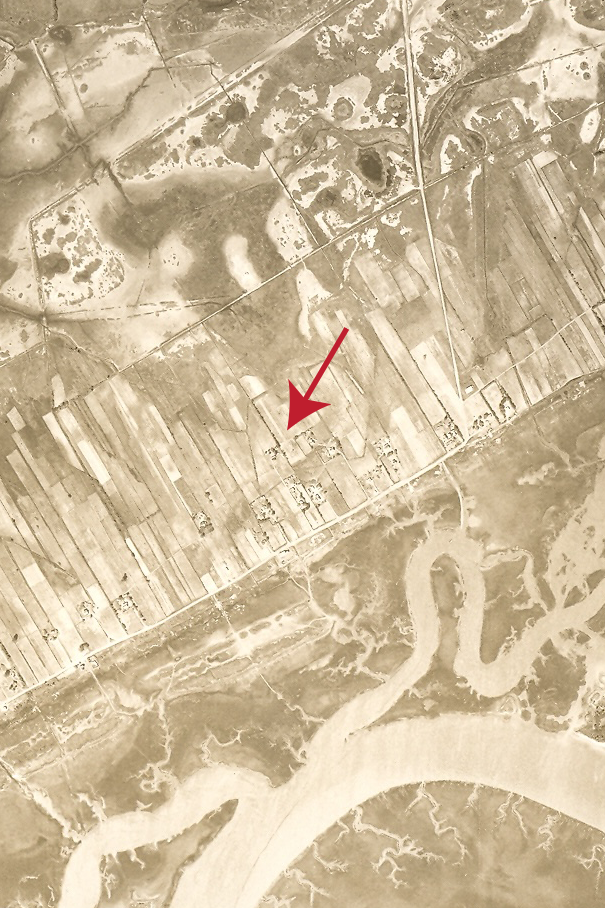
Name of Tree: The Sol Legare Tree Project Designation: Witness Tree Location: Sol Legare Island, Charleston County, South Carolina Species: Grand Sand Oak Approximate Age: Exact age unknown, but shows up on the 1939 agricultural survey aerial view Condition: Stable but at risk of removal Monument or Marker Present: No
Story
Storyteller: Corie Hipp, Elisabeth Ramsey
On Sol Legare Island—one of the last remaining African American settlement communities in the Lowcountry—stands a tree that has watched over its people for more than two centuries. Rooted deep in the tidal soil, this tree has been present for every chapter of Sol Legare’s story: war, emancipation, farming, segregation, celebration, and the ongoing fight to protect the land that sustained generations.
Sol Legare is a place shaped by resilience. Founded shortly after the Civil War by newly freed people, the community became a haven where Black families could build lives on their own terms. It is a corridor listed on the National Register of Historic Places, not because of a single event, but because of the layered history held within its 860 acres. This tree has stood through all of it.
During the Civil War, Sol Legare Island was transformed into a military landscape. Camps, artillery positions, and battles unfolded across the marsh and fields. The 54th Massachusetts Regiment—one of the most storied Black regiments in American history—spent their final night here before marching toward Fort Wagner. As soldiers prepared for battle, this tree stood nearby, its branches absorbing the tension, the hope, and the weight of what was to come. This tree was there.
As the 20th century unfolded, Sol Legare became a center of Black life in the Charleston area. One of the region’s first African American schools still stands today. Mosquito Beach, just beyond the marsh, became a sanctuary during segregation—a place where Black families could swim, dance, gather, and celebrate without restriction. Juke joints lit up the shoreline, and notable figures from across the South found community there. The Seashore Farmers Lodge, built in 1915, served as the heartbeat of Sol Legare and now stands restored. This tree was there.
Through every era, this tree has remained a quiet guardian. It has watched descendants of the original settlers continue to live on the land their ancestors carved out of possibility. It has witnessed storms, celebrations, births, funerals, and the everyday rhythms of a community that has endured against all odds.
Today, Sol Legare faces the pressures familiar to many settlement communities: development, subdivision, and the threat of erasure. The land was never meant to be carved into pieces—it was meant to be inherited, stewarded, and passed down. The tree knows this. Its roots hold the memory of a place where land and people sustained one another.
The history of the Sol Legare tree is still unfolding. But what we know is this: It is more than a tree. It is a witness. A keeper of memory. A living archive of Black resilience, land stewardship, and generational continuity.
Sol Legare matters—every acre, every story, every branch reaching toward the future.
Photo Gallery
Want to Learn More?
Learn more about saving the tree at Sol Legare here: https://www.instagram.com/save.jamesisland/?hl=en
Learn more about the Black history on Sol Legare here: https://artsandculture.google.com/u/1/story/the-seashore-farmers-lodge-preserving-the-past-to-educate-the-future-international-african-american-museum/HAWxdXPoKWQHIw
What’s going on with this tree and Sol Legare now? Learn more here: https://www.live5news.com/2026/07/14/grand-sand-oak-tree-saved-sol-legare-after-applicant-withdraws-removal-request/